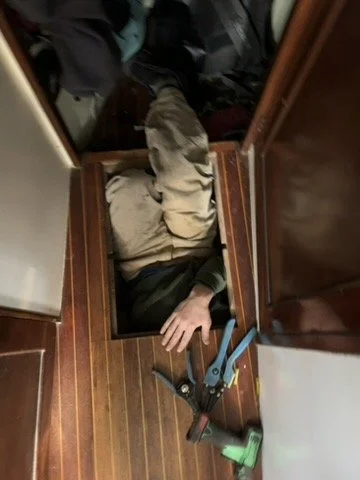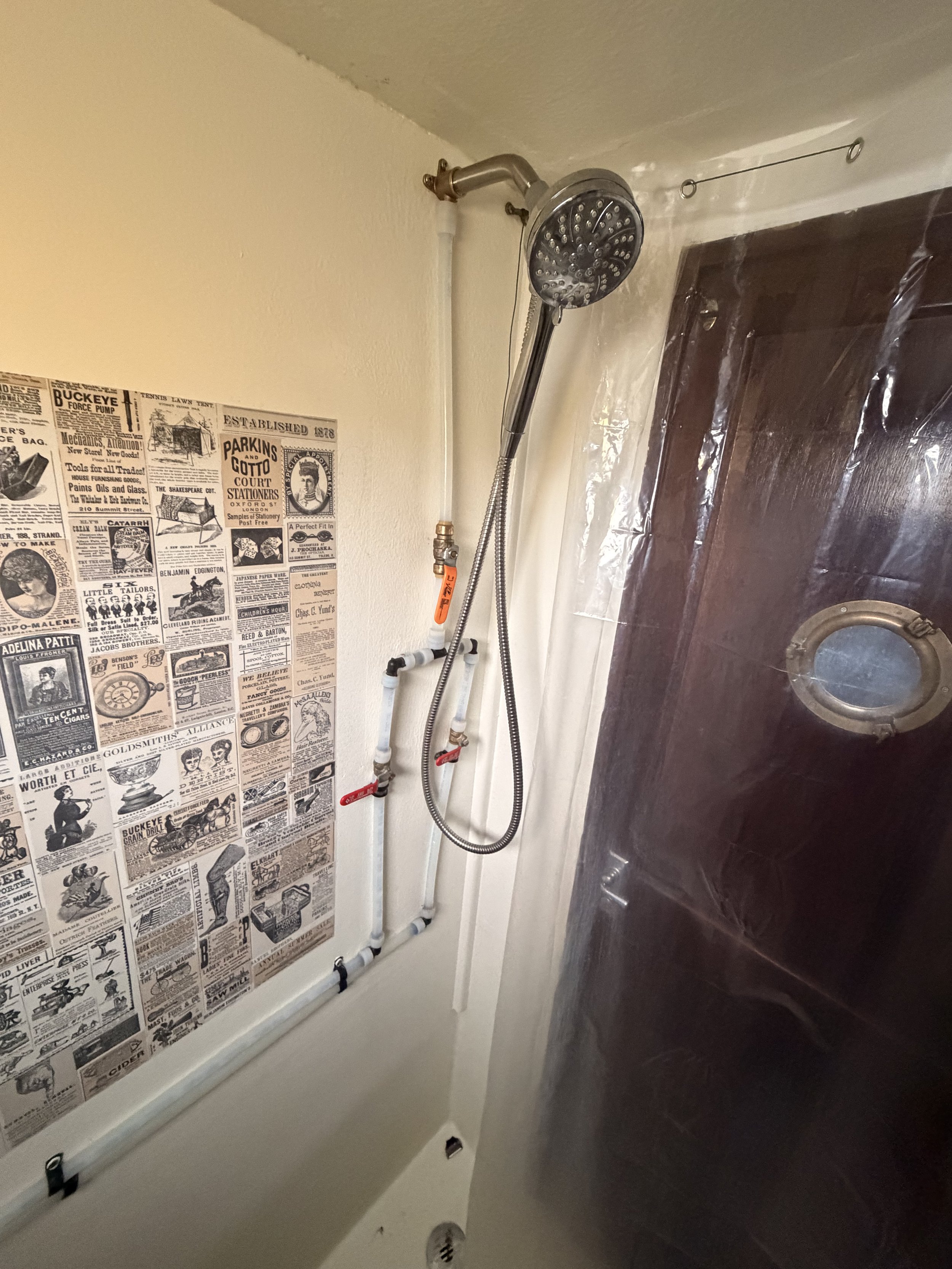
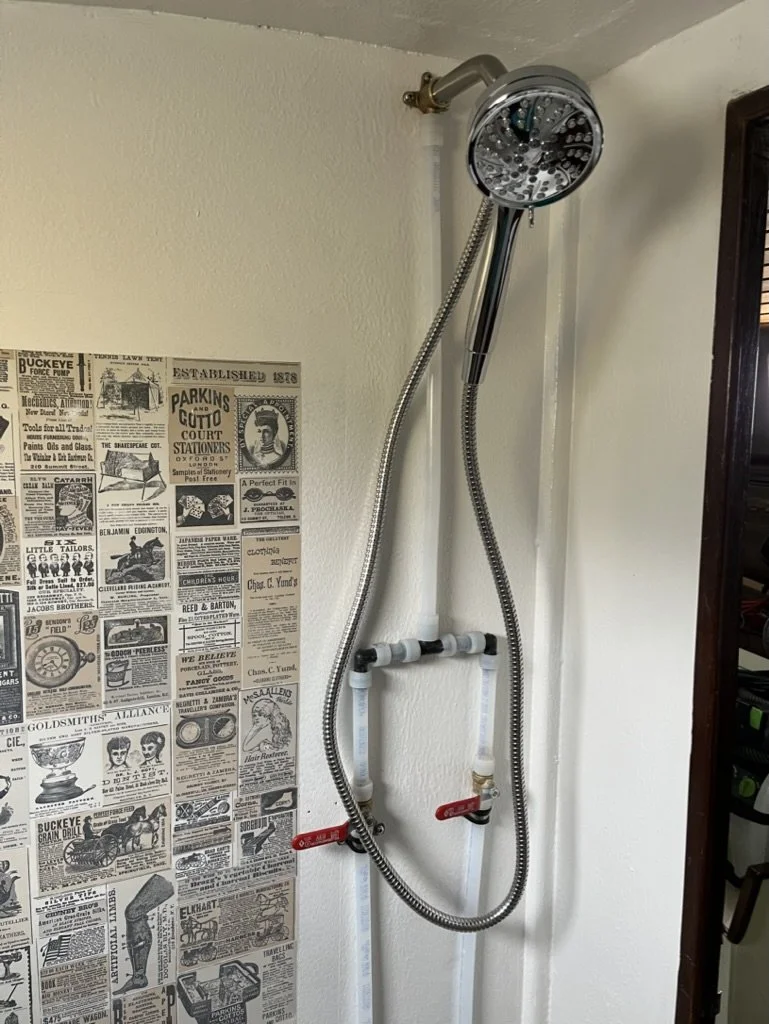
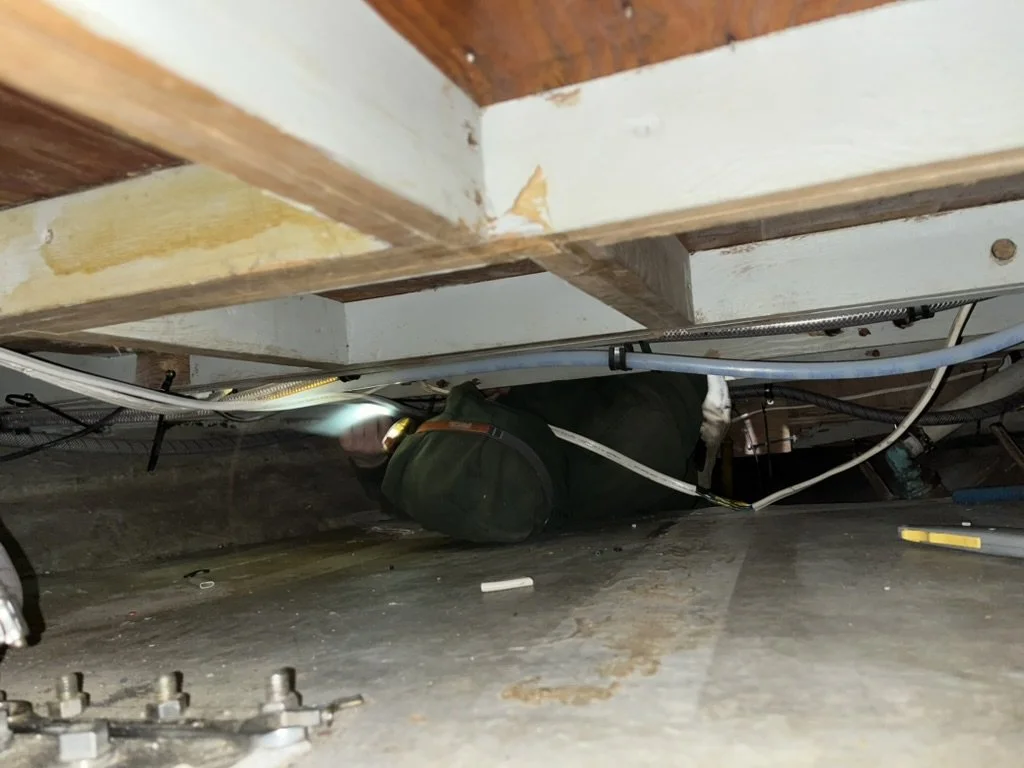
Turns out hydronic heat systems have a lot of components. All of them are very high quality. All of them are priced accordingly. After a year of wallowing in receipts, PEX fittings, circulation pumps, valves, manifolds, and the occasional diesel spill on the saloon floor, we were six days overdue for a shower and anchored in a bay with a glacier spilling into it.
That’s when I connected the final fuel hose and hit the switch.
The Hurricane fired up. The system burped, hummed, and then — hot water. On‑demand hot water. Radiator heaters in every room like one of them fancy yachts. The boat warmed evenly. The sinks steamed. The shower actually existed.
Sara got her hot water. I got my victory. And the glacier got to witness the moment we finally joined the 21st century.
“Dylan, I want shower” Sara said again to me after living on board for 4 years without hot water. It wasn’t until a year later that I could finally deliver the requested hot shower.
Fair enough. We’d earned it.
I’d been researching heating systems for a while. Our floor‑mounted Dickinson drip stoves do a decent job keeping the boat warm, but they also soot up the outside, occasionally the inside, and always at the worst possible moment. I was leaning toward an Espar or some other hydronic setup… until Craigslist intervened.
One day a listing popped up: Hurricane II boiler — Juneau. I called immediately. The guy was three slips down. I walked over, looked at the unit, and bought it on the spot for “cheap.” And by “cheap,” I mean the kind of cheap where the first purchase is cheap, and everything that comes after requires a second mortgage.
The boiler itself had low hours and came with its electronic controls, a few pieces of ducting, and a six‑gallon water‑heater tank. After studying it, repairing it, and bench‑testing it until I could practically recite the wiring diagram from memory, I dove into sourcing parts for a full hydronic install.