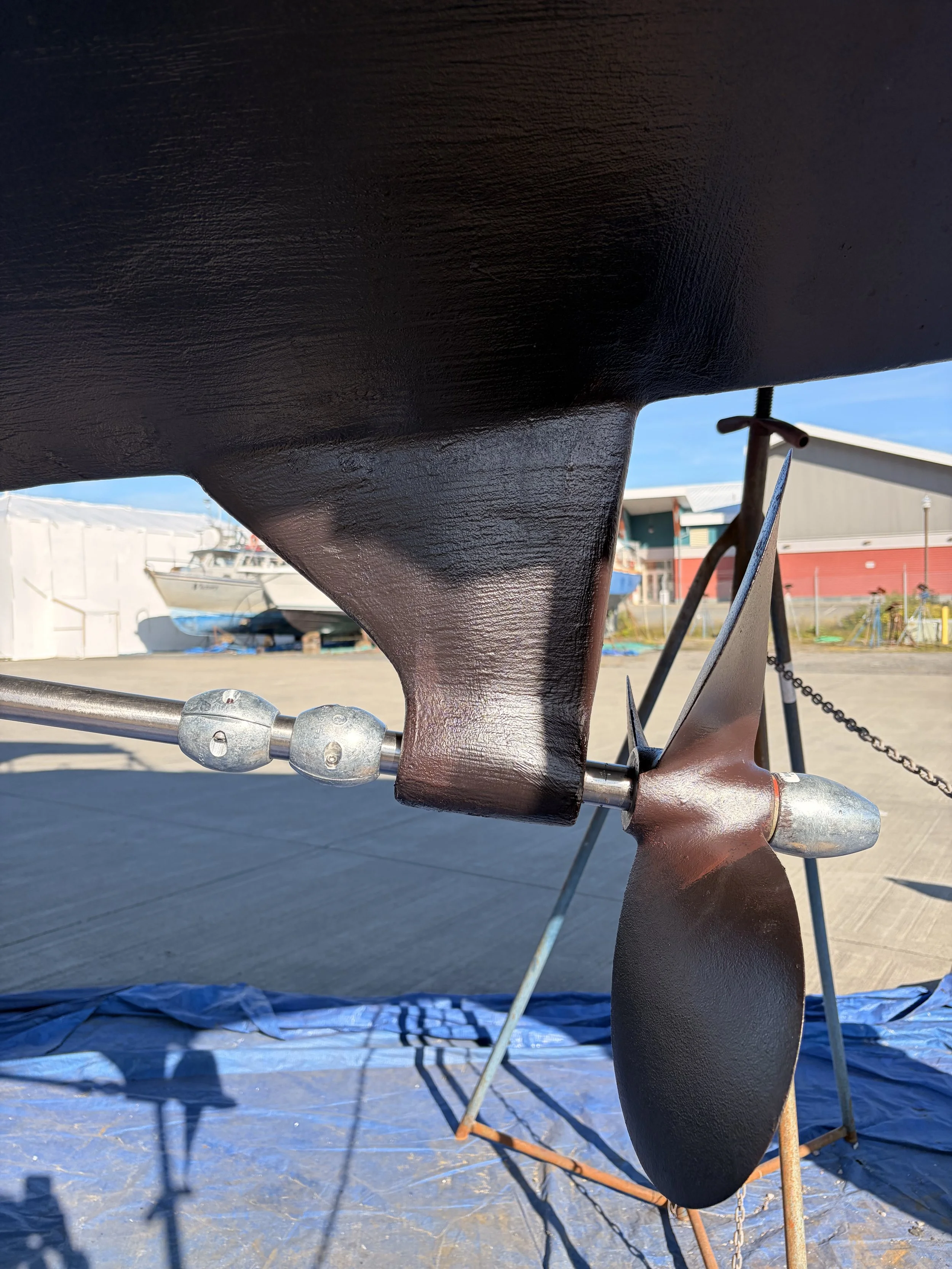
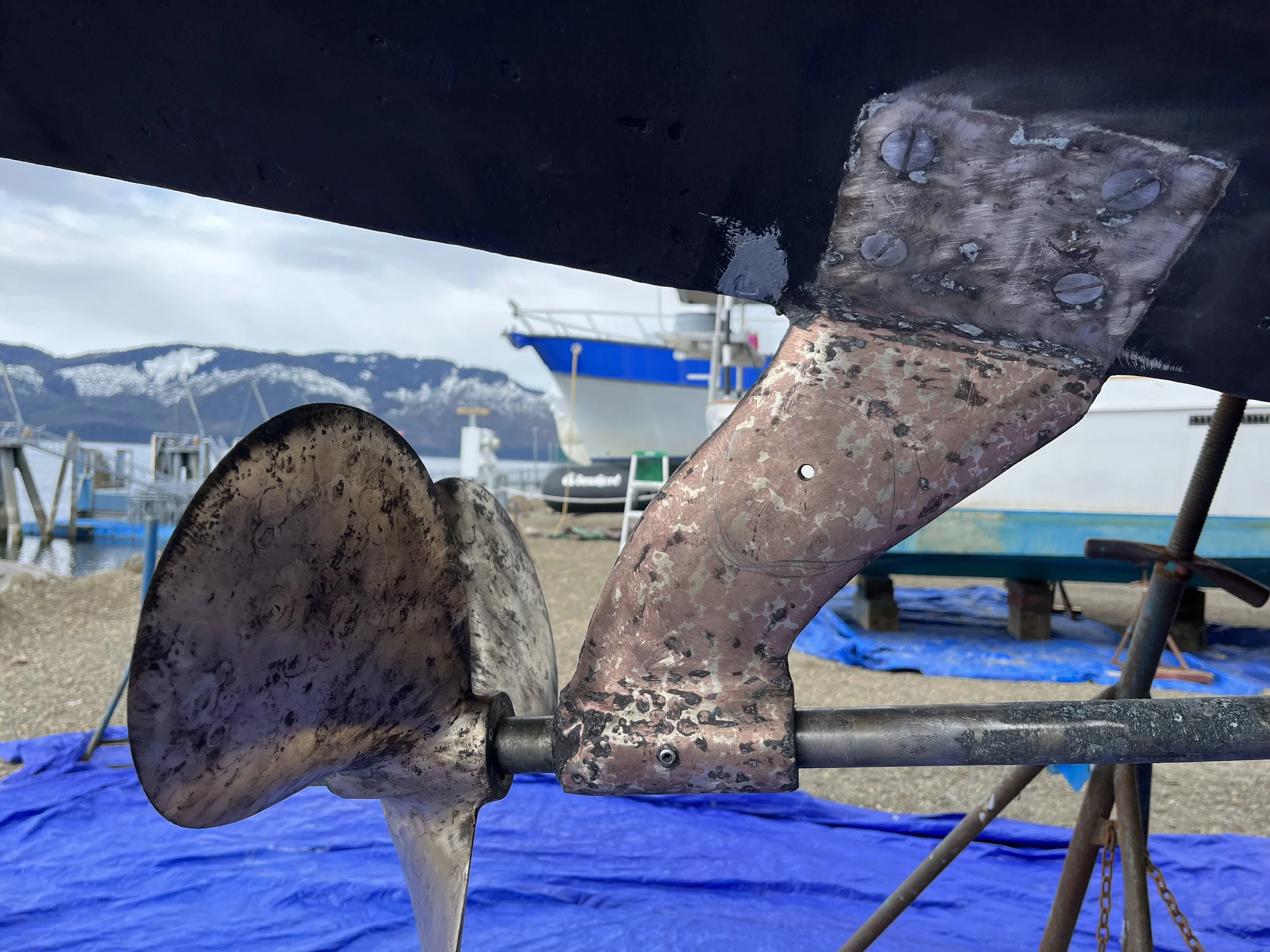
Now, when I say “the strut,” you might think I’m talking about how the cat patrols the boat (he’s not stray), or how I walk after shredding Eaglecrest all day. It isn’t either one of those. But this strut is something else entirely.
“The Strut” is the bronze chunk of metal under the boat that mounts to the hull and reaches out to hold the cutless bearing, which in turn holds the spinning prop shaft steady as it exits the boat. The whole setup keeps the shaft straight and the prop from wobbling around as it spins. Pretty important piece of hardware.
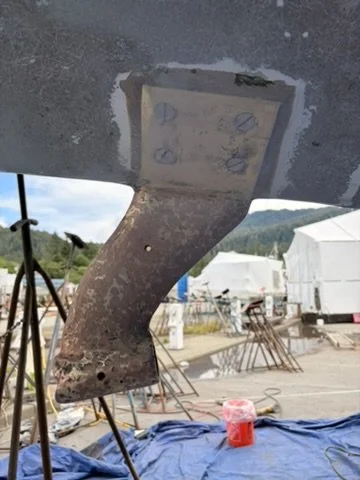
Ours had been neglected long before we owned the boat. It was pink almost all over, which is a bad sign — it means the zinc in the bronze has been leached out from galvanic action or electrolysis. Some guys said, “Oh, that’s fine, it’ll never break.” The internet said, “It’s doomed, you’ll all die tomorrow.” So we’ve always been nervous about its strength and planned to deal with it during our Wrangell haul‑out in 2026.
Luck was on our side: the most knowledgeable (and busiest) guy in town, Tyler the machinist, walked over and gave us five minutes of his time. He immediately grabbed a wrench and gently tapped the middle of the strut. It made a hollow, dull sound.
He said, “Oh, that’s no good. See how it sounds dull and doesn’t ring like solid metal?”
Then he explained how big of a project replacing a strut is. I’m pretty sure “I hate doing struts” came out of his mouth. Not exactly comforting.
But that tap told us everything we needed to know — the strut wasn’t just ugly, it was compromised. And it was time to reinforce it before it decided to fail on its own schedule.
Tyler could have built us a brand‑new strut out of 316 stainless if we had contacted him a year ahead of time — or if it wasn’t his vacation right after the big spring rush. But in true fashion, we decided we’d figure this out ourselves.
He did say that reinforcing the existing strut with fiberglass wasn’t a bad idea, and that was something I was already prepared for. Plenty of boats have composite struts, so why couldn’t ours be a hybrid of zinc‑leached bronze wrapped in fiberglass and epoxy?
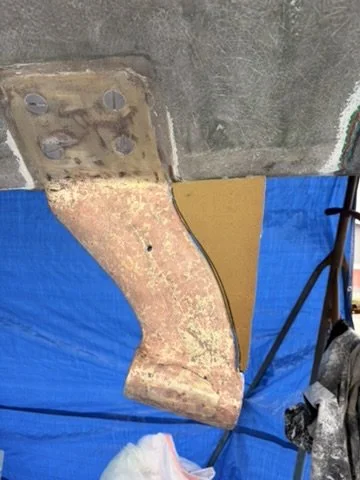
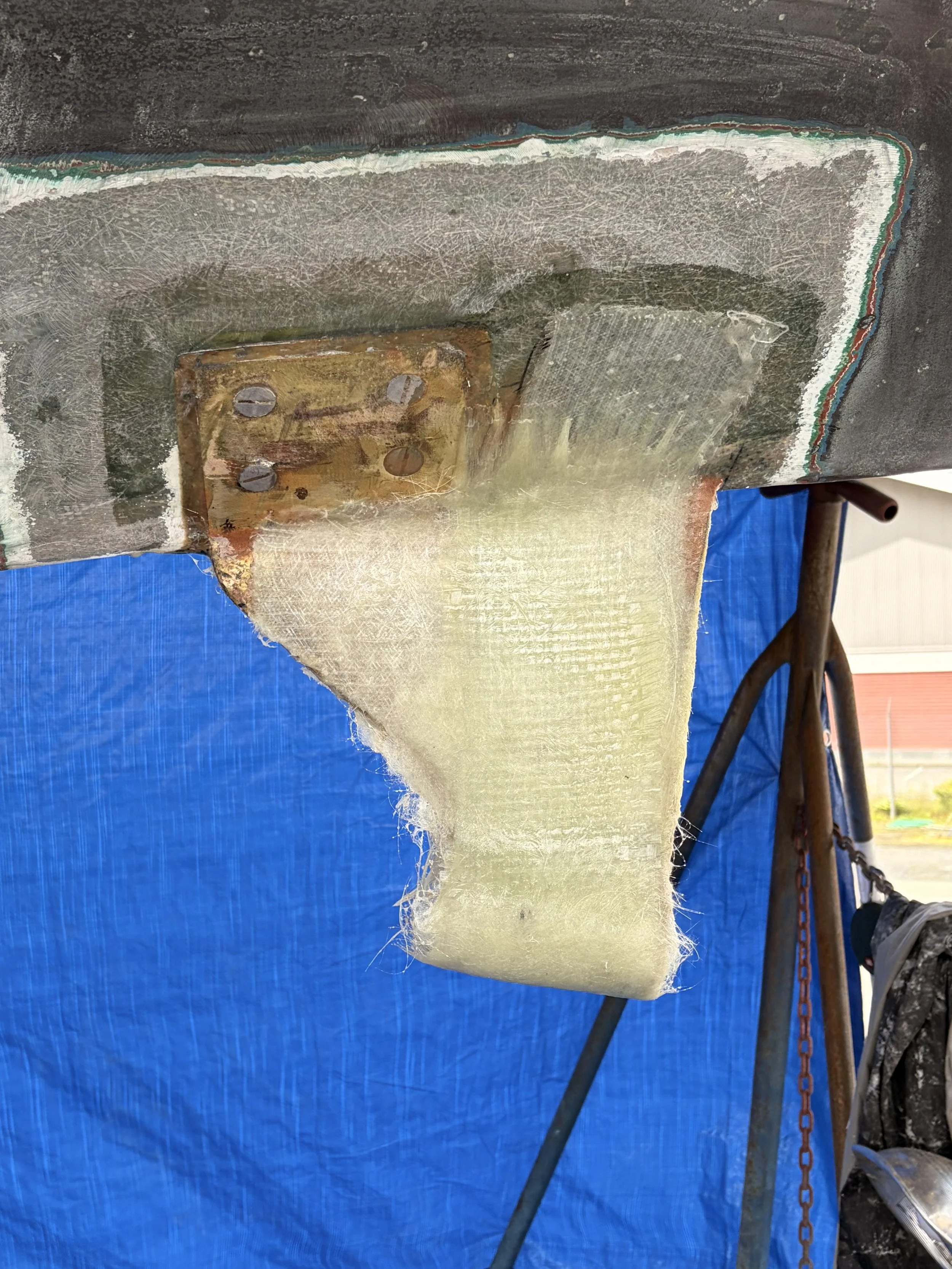
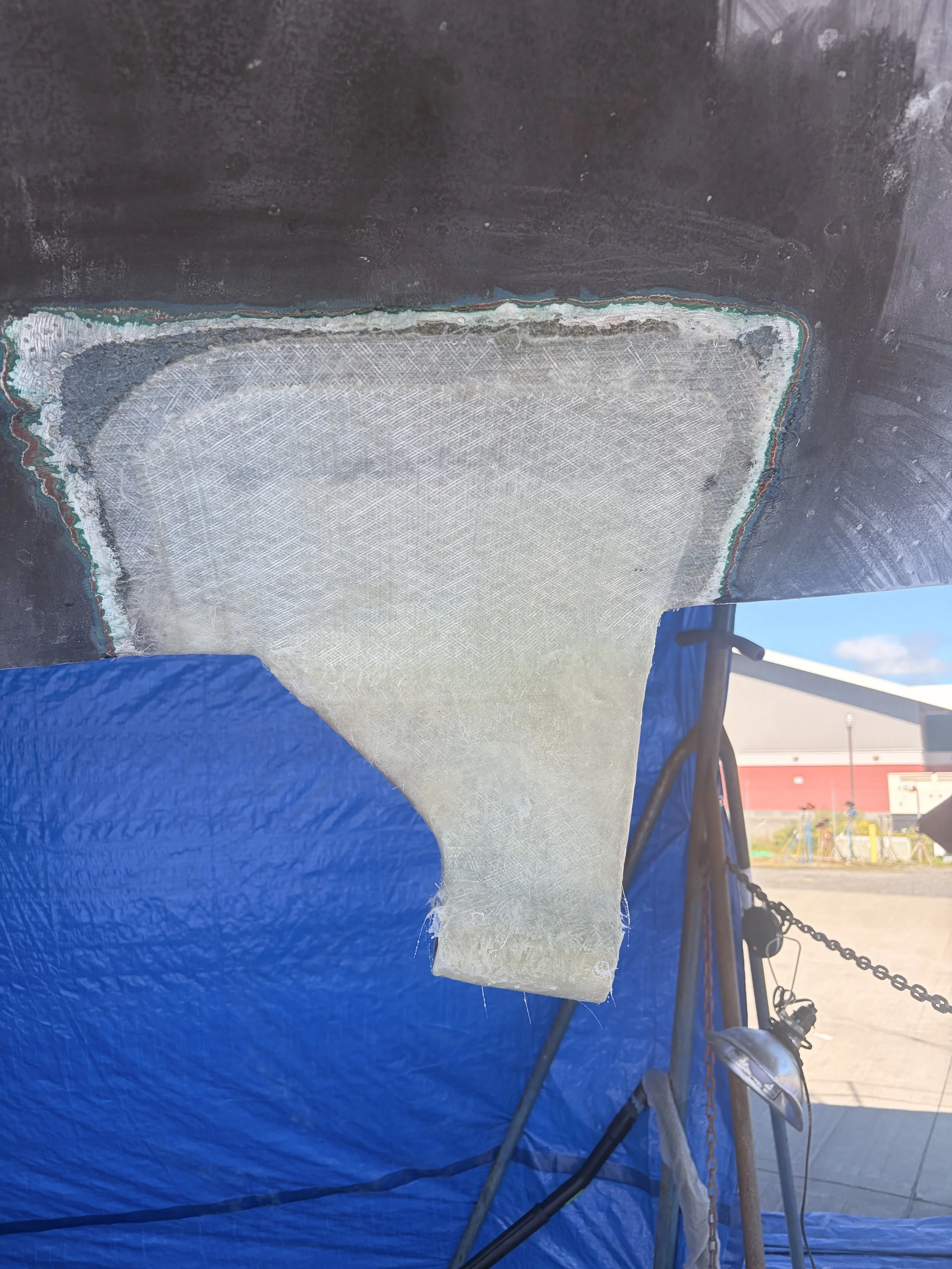
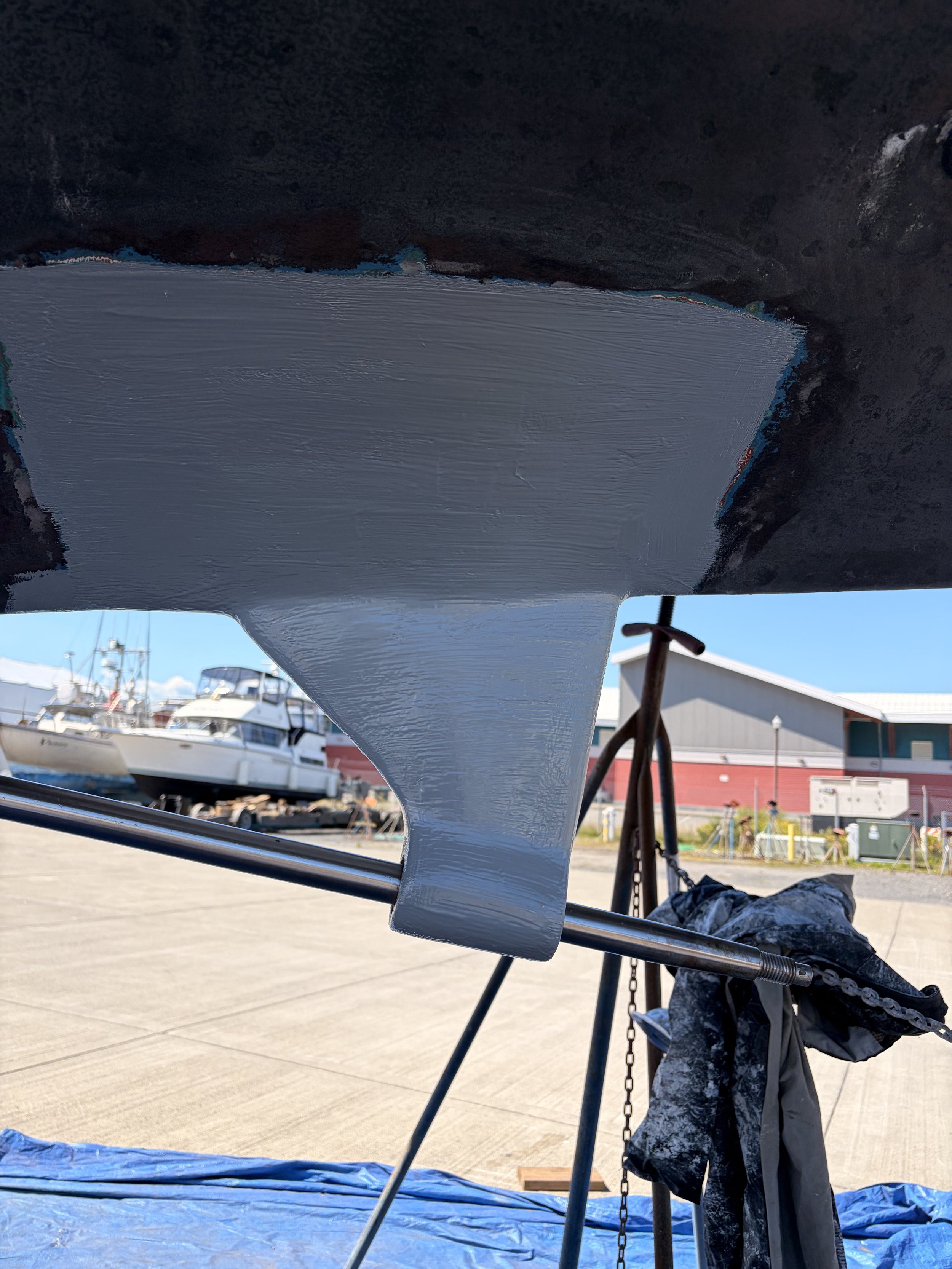
We cleaned the strut up really well, coated it in epoxy, and started laying up fiberglass — layer after layer. We built it from about 1 inch thick to roughly 2.25 inches in a teardrop shape and tied it into the hull solidly.
It was a messy job, but the strut is no longer a compromised piece of pink metal. The composite layup tied into the hull turned it into a solid, reliable structure that gives us real confidence in what’s holding the shaft steady.